TELEGRAMS | ||||||||
|
Before the telephone and for many years after the instruction of the telephone, the Telegram was really the only public service for sending information to a remote location. There were many early devices such as fires, flags, semaphore signals etc but these were mainly for military purposes. Telegrams and later the Telex service was a public service and was seen as a legal contract, as if a letter had been sent. A Telegram could be traced due to all internal transactions being time stamped. Nothing had more urgency than a telegram, as it is normally signed for by the receiver with the telegram itself being a message with legal document status. As the system was work force dependent, trying to cut costs was a big issue and the telegram service was always expensive, but it was also dependable with many telegrams being received within one hour in the UK. The service became world wide, but this was expensive due to high charges made by the companies who owned the interconnecting cable routes across the globe. So, how did Telegrams work?
The service was very efficient and quick, as the boys only normally delivered one telegram at a time and Telegrams were dispatched as soon as they were received by the receiving Post Office. Special greetings telegrams were introduced in 1935 and even though they were popular they did not stop the decline in the service. By the 1980's the system was running at a loss and the business was restructured, which reduced the services provided and which allowed a reduction in staff and costs. The "Telemessage" was introduced in 1981 and these costs £3 for up to 50 words, plus VAT. These could only be phoned in up to 8pm on Mondays to Saturdays and were delivered anywhere in the UK by first post the next working day. The original Telegram service finally closed in April 1983. The Telemessage service was closed by BT in July 2003 and sold to Telegrams Online. It is rumoured that Spike Milligan, who had an upstairs office in his house, once telegrammed his wife to make him a cup of tea!
Phonogram Service
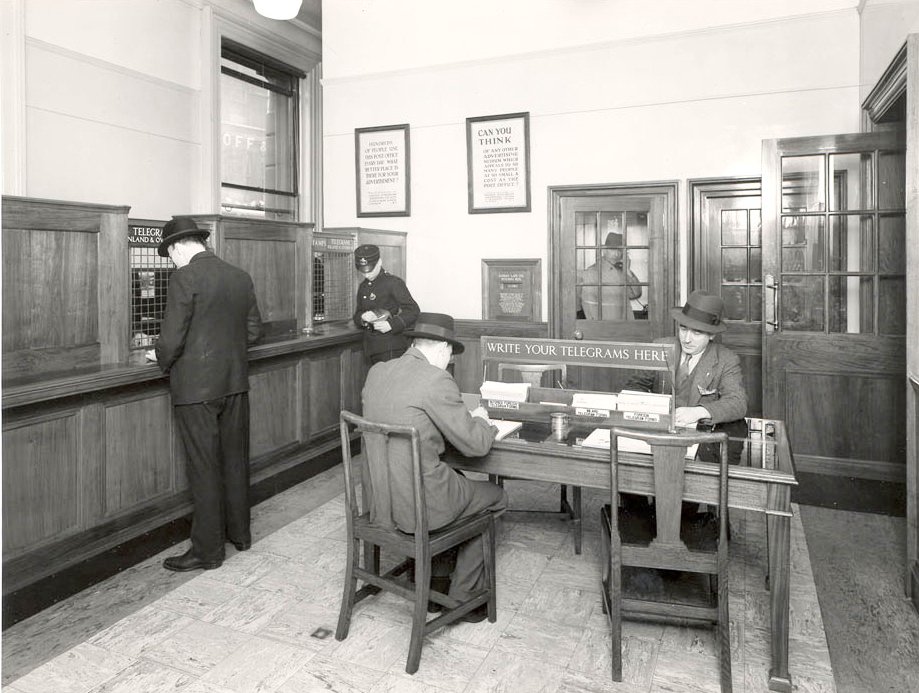
A large Post Office with a Telegram counter The pictures below are from large Telegraph offices
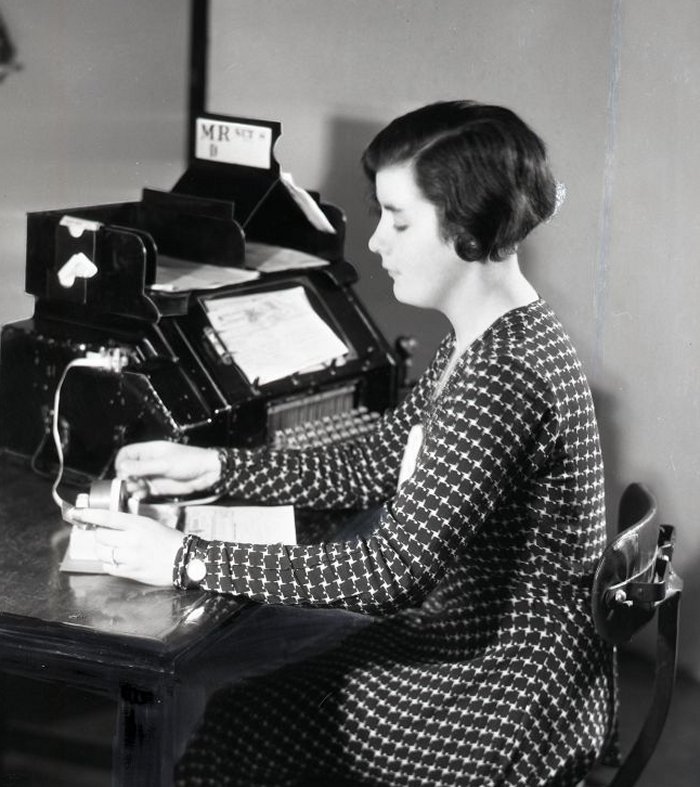
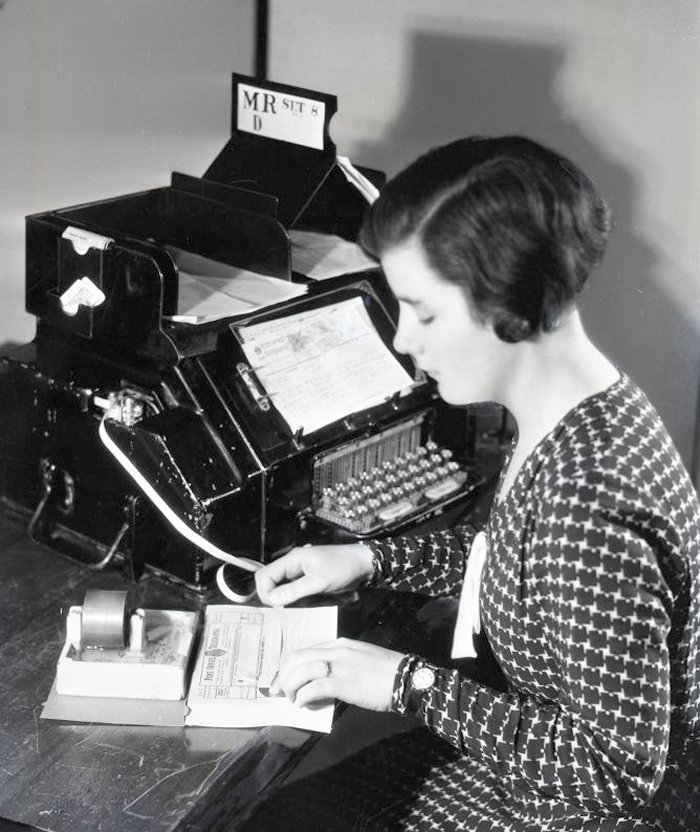
Morse operator sending a Morse message of the telegram
Morse operator sending a Morse message
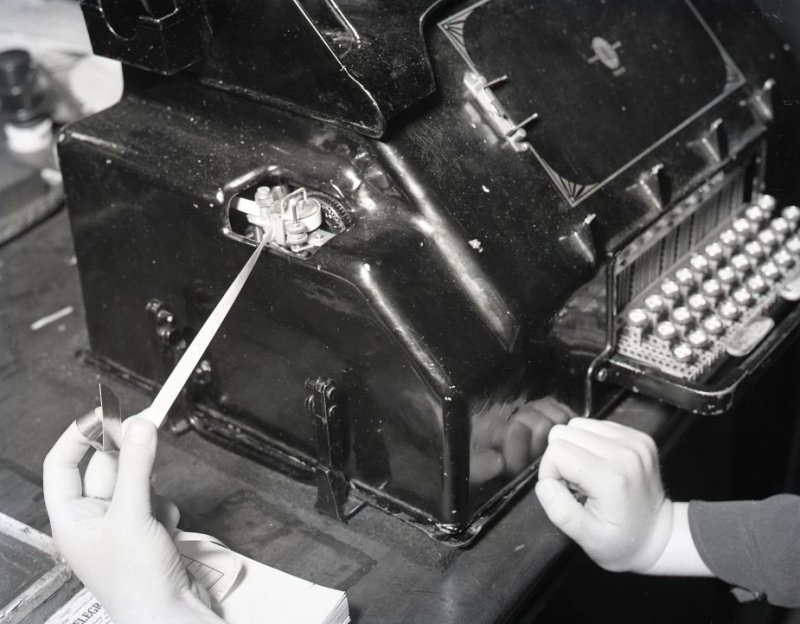
Message received on a Creed Teleprinter
Message received on a Creed Teleprinter
Message received on a Creed Teleprinter
|
||||||||
Last revised: September 06, 2026FM2 | ||||||||