|
Two types of
switchboard
were available for the Order-Table Equipment No. 2:-
-
The Switchboard, Phonogram No. 1A was an 18 inch
high, wooden unit, that had provision for 16 jack and lamp strips
(80 lines max) to be fitted. The Switchboard would be fixed to
the desk. The Switchboard would be shared by two operators.
-
The Switchboard, Phonogram No. 3 is a modular
switchboard, consisting of two foot long wooden units that are
joined together to make one long multiple. Each unit is 9
inches high and comprises of two 12" long sections, where up to twenty four
jack and lamp strips (from 80 lines to 120 lines max) could be fitted. The
switchboard units would normally be fitted on 2 inch stands.
When used for Phonogram work, a conveyer belt would be fitted under
the desk and the 2" raised section would have openings to allow
forms to drop onto the belt.
The pictures below show the Switchboard, Phonogram No. 1A
as used
on an installation for the Great Northern Telegraph Company.
Pictures taken in 1939.
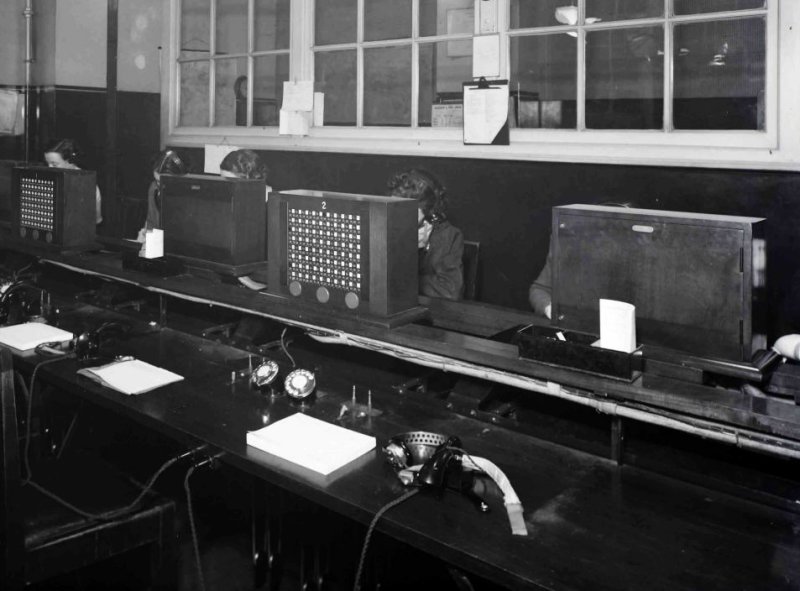
Switchboard Phonogram No. 1
Two clerks, each having their own dial and cords, share a single
Switchboard.
As the GPO already used this apparatus in the UK for Phonogram work, then
the conversion
to Order-Table working was probably a cost effective solution.

Switchboard, Phonogram No. 1
Close up of the Clerks position - which shows the switchboard being used by
both Clerks.
The desks shown are called Desks, TL1629.
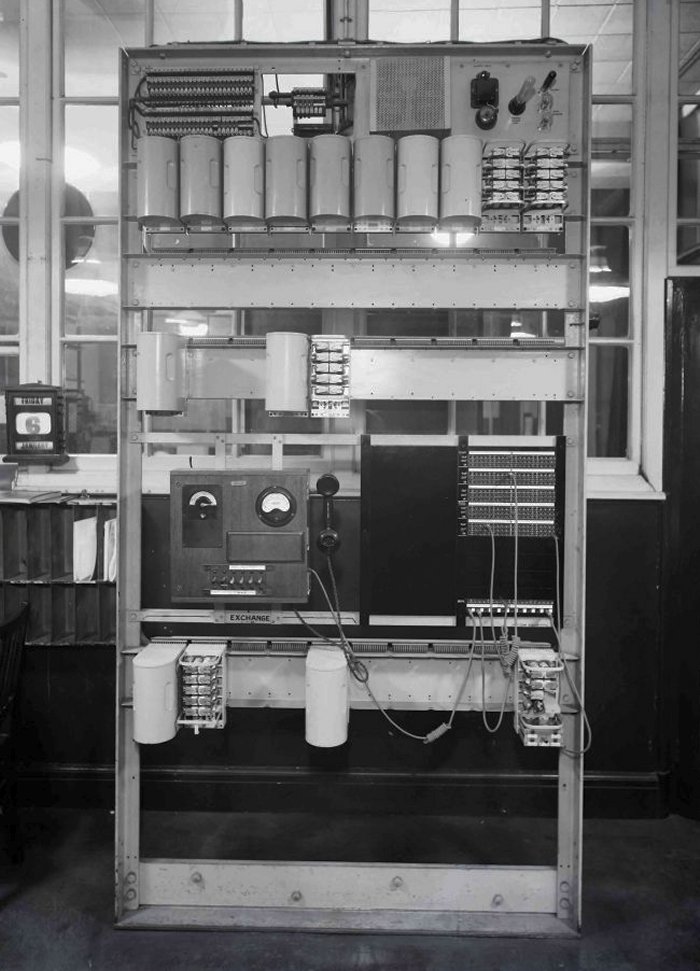
Equipment rack
Fitted with a Tester AT2607 and a
Tester No. 43
The pictures below show the Switchboard, Phonogram No.
3
These pictures show switchboards used in GPO Phonogram offices
Pictures taken in 1932
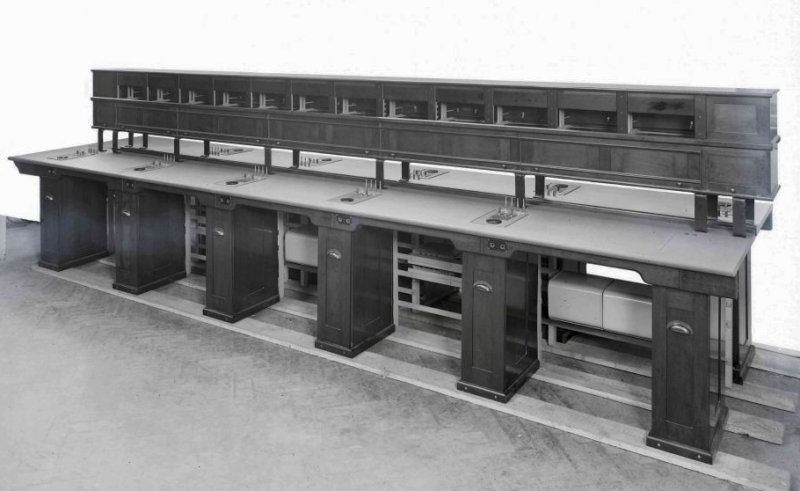
Switchboard (top section) fitted to a desk, ready for
installation as a Phonogram suite.
The desks are called Desks, TL1612.

A Phonogram suite in the Central Telegraph Office
|