GPO Vehicles | ||||||||||||||||
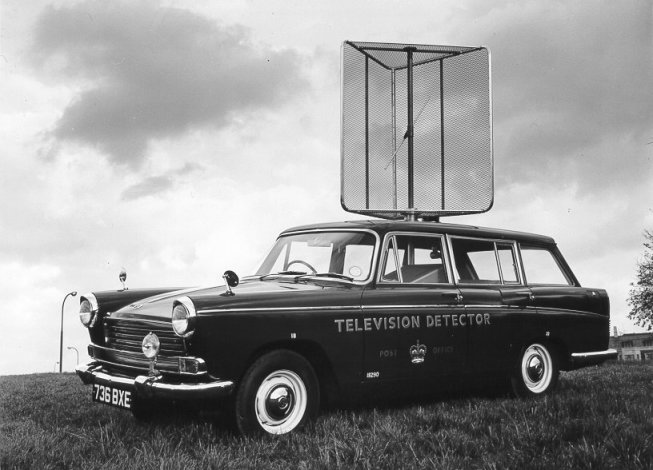
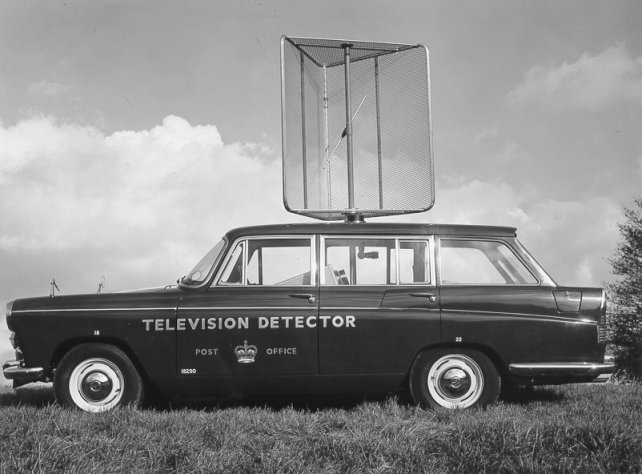
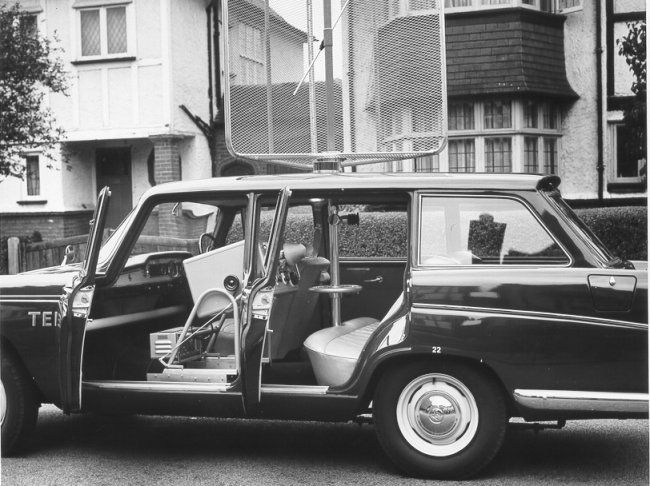
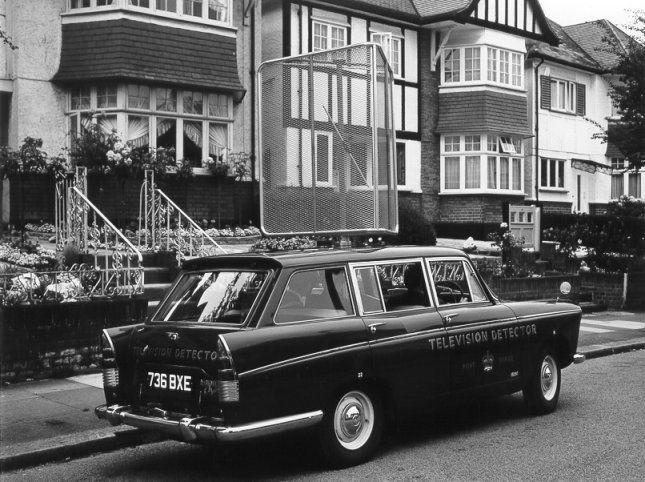
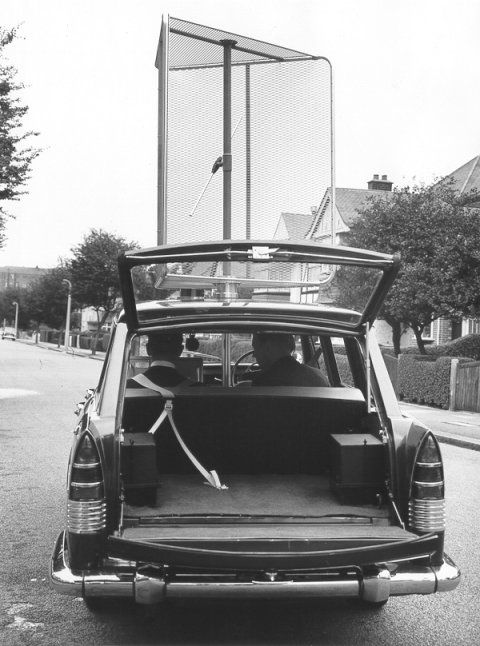
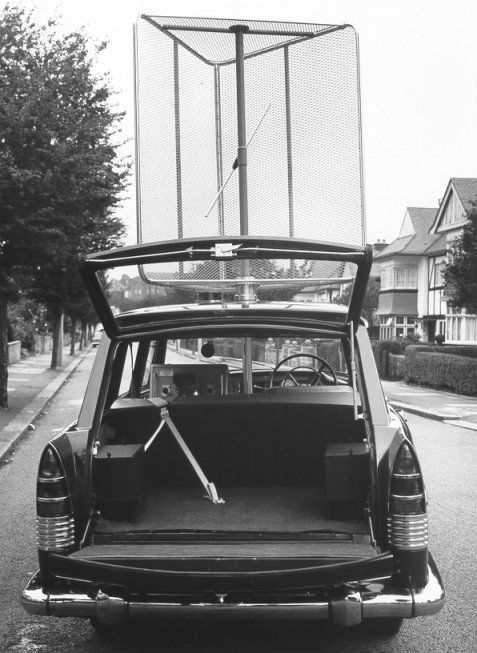
Text taken from the The detection equipment is mounted in a modified Series 5 Morris Oxford
Traveller, the panoramic receiver and power unit being in the position
normally occupied by the nearside front passenger seat. The operator
sits in the nearside rear seat and a Postal and Telegraph Officer occupies
the offside rear seat. This change of seating position was found
necessary during a trial of best practice and all new vehicles are now four
door. A shielded map-reading light is fitted to the
rear of the driver's seat for the use of the postal officer. The
driver's view is unobstructed by the equipment except for the central mast
tube and a periscope, which are visible in the internal mirror. Wing
mirrors are provided, the nearside mirror being adjusted to show the
clearance between the aerial and roadside trees when the car is tilted by a
steep road camber. A 3-phase,self-excited a.c. shunt generator,
belt-driven by the engine and operating at a maximum speed of 11,000reV/min,
supplies a maximum output of 800watts. The current in the rotating
field-winding of the generator is controlled by a transistor-amplified
vibrator-type regulator, and the stator output is rectified by bridge‑
connected silicon-junction diodes and used to charge the vehicle batteries.
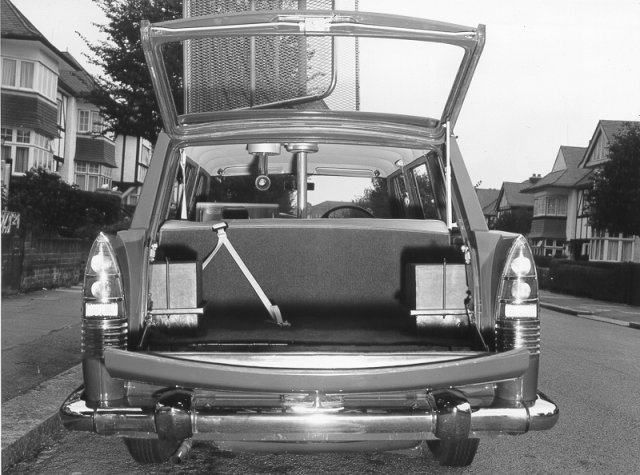
The two series-connected 6-volt batteries of 110 ampere-hours capacity are
enclosed behind the rear seat in sealed cases vented on the underside of the
car. The detection equipment is normally operated with the vehicle
stationary and the engine idling. Under these conditions the output of
the generator is sufficient to balance the electrical load. A
fully‐screened and suppressed ignition system is fitted to the vehicle, and
radio-interference suppressors have been fitted to the windscreen wipers,
petrol pump, heater booster and clock. The standard fresh‐air, heating
and ventilating unit of 2-75 kW capacity utilizes waste engine heat.
|
||||||||||||||||
Last revised: February 04, 2025FM3 |