GPO Vehicles | ||||||||||||||||
Two prototype HA vans were purchased in 1965 for use as radio
interference vehicles. But when the Morris Minor ceased production the
Post Office had to make a decision on what small van to buy.
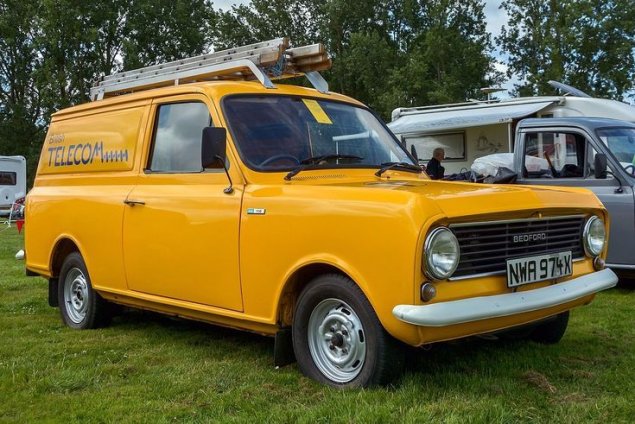
In 1980's British Telecom Livery. HA vans purchased in 1979/1980 had the aluminium trays replaced with plastic bins.
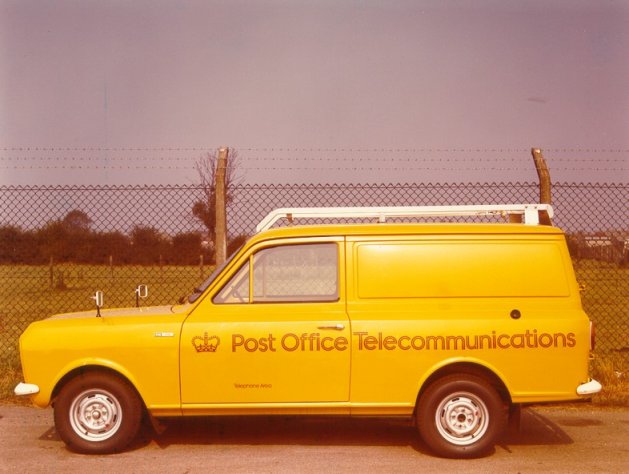
In late 1970's Post Office Telecommunications livery
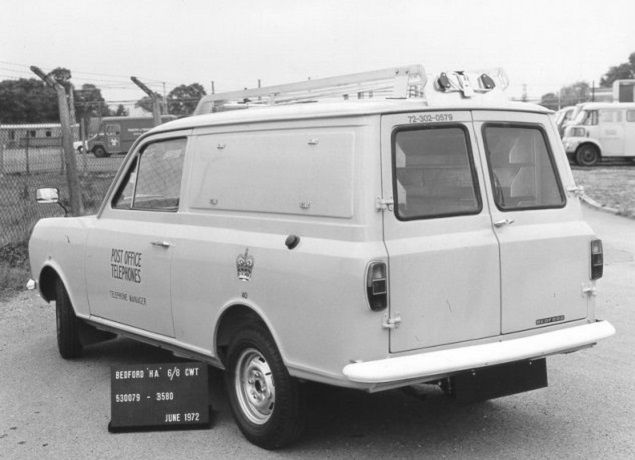
In Early 1970's Post Office Telecommunications livery
After an initial introduction, later vehicles had the engines
de-tuned circa 1975.
Early models were fitted with Crossply tyres and because of
this, the tyre pressures at the front were 20lbs,
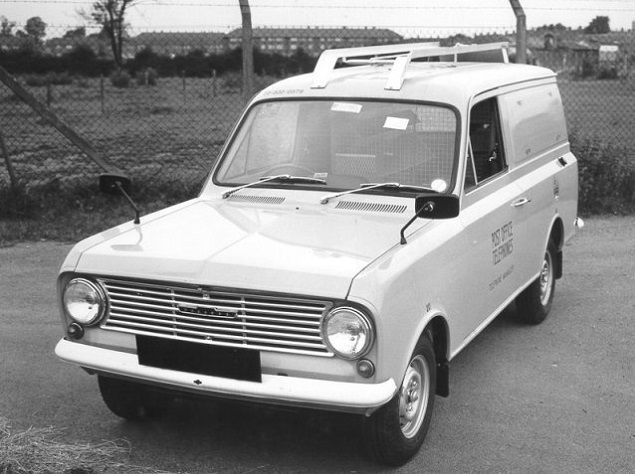
This very early model has no provision for step ladders.
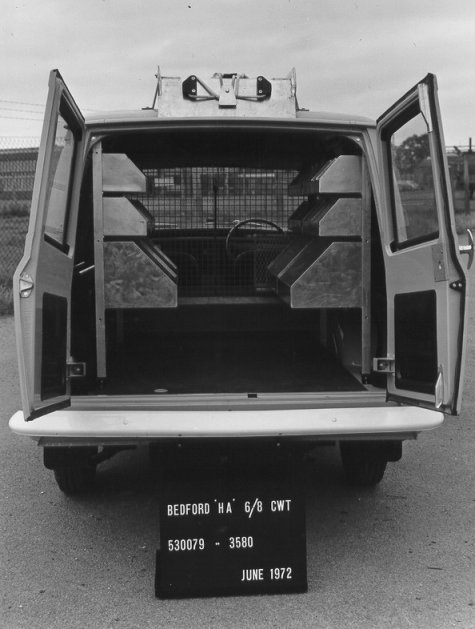
This was resolved by means of a plastic box The side racking is of aluminium - which tended to rattle.
Basic by today's standards. The seats were solid, no back
adjustment, but were surprisingly comfortable.
They certainly did not come with hub caps, but notice that the wing mirrors were changed to door mirrors, as the wing rotted out and the mirrors fell off!
A New Design of Light Van
The successor to the Minor could have been one of several makes of vehicle, and it is possible with competitive tendering for the make to change from one year's purchase to the next. It was therefore thought prudent to design a standard racking system capable of being fitted to any of the eligible makes of light van. Such a standardised system inevitably does not make the best use of a particular vehicle, but vans of this class are influenced by the saloon car version of the design and are generally too long and have more volume than is required for a vehicle carrying the sort of equipment and tools used by telecomms engineers. What may look like wasted space behind standardised racking may in fact prevent the vehicle being overloaded. The considerations affecting the design were:-
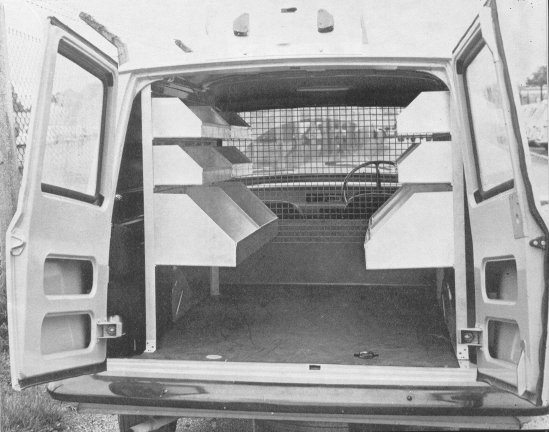
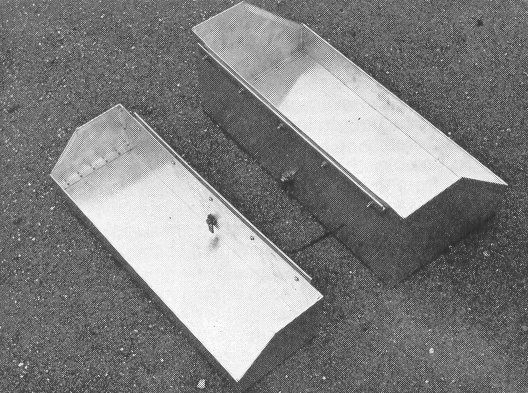
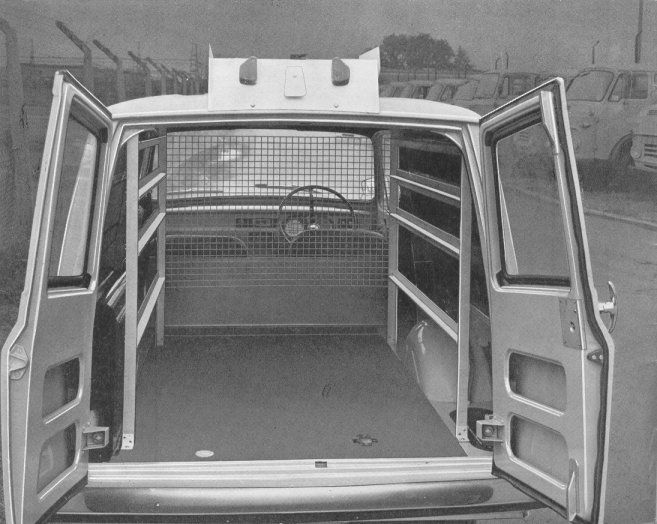
The successor to the Minor will be the Bedford HA to be issued shortly. The ladder rack is similar in design to that fitted to the last issue of Minors. The method of tying the ladder is described in TD8 Memo No 33/71. Inside, the petrol tank is visible behind the near side binning between the wheel arch and the rear door. The bins are cantilevered from two simple frameworks made from aluminium angle. The bulkhead, of wire mesh, bridges the two frames leaving a gap underneath enabling long objects to be carried. The driver and passenger are protected by a sheet metal partition fitted immediately behind the seats. The space between the partition and the bulkhead is accessible from the cab and may be used to store the toolbag and items regularly in use, so reducing the need to open up the back of the van. The folding steps are carried under the roof as in the Minor van. The final design of the bins is basically the same except for strengthening, removal of sharp corners and fitting of partitions in the small bin. The groove at the top of the back of each bin engages the supporting framework above it and the bottom corner sits in the angle below. A gravity catch engages the framework below the bin and prevents it from detaching itself during cornering. Two bins fill each level of the framework. Each bin is fitted close to the rear doors and slide along to the position near the bulkhead. Removal is also effected close to the rear doors, preventing the adoption of awkward lifting postures. By using a cantilever construction the floor of the van is left clear. If more room is required the rear large bins may be detached and slid forwards underneath those remaining. Any combination of bins may be used to give the best arrangement for a particular duty and it is possible to make other fittings to attach to the frames for specific needs.
View of two prototype bins
|
||||||||||||||||
Last revised:FM3 |